

Off-plan project management helps you track a purchase from reservation and staged payments through construction and handover. The main risks for buyers are committing to a payment schedule without planning for it and relying on a handover date without understanding the relevant terms. This guide explains what buying off-plan in the UAE involves, how to organise payments, where to find project information and what to consider when preparing for handover.
Key Takeaways
- Understand how an off-plan purchase differs from a completed home, and which project and developer details help inform your choice.
- Map instalments against your cash flow and follow payment records alongside construction milestones.
- Read advertised handover dates as part of a project timeline, and learn how progress and handover updates fit into your planning.
- See how project management moves from reservation and buyer records through payment tracking to handover preparation, and where SANSAV Properties’ investment offering may fit.
What is an off-plan project?
An off-plan property is purchased before construction is complete. You assess the development, payment milestones and planned handover, not just the future home.
Review the developer’s completed projects, delivery record and current construction progress. Examine project approval information and escrow arrangements under the applicable UAE regulatory framework. Consider the developer’s reputation alongside the status and documents for the specific development: a strong track record alone does not describe every project.
Property portals can help you discover developers and select projects for closer review. Use each listing to note the developer, location, advertised handover and payment-plan details, then compare these with official project information. International and foreign buyers can follow the same steps; a listing alone does not establish project readiness.
Dubai Law No. 8 of 2007 provides for 5% of the escrow amount to be retained for one year after units are registered to buyers, according to the Dubai Legislation Portal.
Unlike management of a completed property, off-plan project coordination focuses on construction updates, unit records, buyer documents and payment milestones. Managing a completed home instead involves operational needs such as tenancy and maintenance coordination.
Project coordination can cover responsibilities such as organising buyer communications, consultant input and construction updates. Defining roles clearly helps establish how the work is organised.
Project-management software can organise unit records, buyer documents, payment schedules, construction milestones and reports. A shared tracker makes pending tasks and payment status easier to follow.
Developers lead project delivery; consultants advise on technical or design matters; and project managers coordinate schedules, records and communication. Clear role allocation helps manage approvals, construction updates and handover preparation.
Payment schedules and cash-flow planning
For an off-plan purchase in the UAE, the payment plan sets out when instalments are due. Managing the project schedule means tracking each payment date alongside construction progress and your planned cash flow.
Instalment tracking and cash flow
Build a cash-flow calendar from the payment plan, recording each due date, amount and payment status. Compare upcoming instalments with expected income and existing commitments to plan how much capital to keep available. For each apartment or villa, keep a separate record. A clear tracker distinguishes a scheduled payment from one recorded as received.
Construction-linked payments and milestones
Some payment plans link instalments to construction milestones rather than dates alone. Record each stated milestone, its reported progress and the related payment together, keeping project updates alongside the schedule. This makes it easier to see how progress relates to your next instalment and maintain a clear record as construction advances.
Compare the instalment schedule with your cash-flow calendar before committing. Each development may set a different schedule, so review the timing and payment triggers in its documents. If payments are linked to construction stages, track progress updates as well as due dates. Keep both visible in your records.
For consistent tracking, record each instalment against the relevant unit and buyer file. When a payment is received, update the finance record and notify relevant users to help avoid confusion about booking status. A structured tracker can bring payment plans, construction updates and records into one view, supporting clearer cash-flow planning.
Project handover dates
An advertised handover date is a planning reference, not a substitute for construction updates. Track the stated timeline alongside progress and the steps required before taking possession.
Construction progress and handover tracking
Keep a timeline linking the advertised handover, construction updates and key buyer communications. For example, Safa Two by De Grisogono Tower B is advertised with a 2027 handover, while Brabus Island Residences is advertised with a 2029 handover. Record when each update arrives and what stage it describes. This creates a clearer view of progress against the published schedule, rather than relying on the date alone.
Resale restrictions and handover planning
If resale is part of your investment plan, review the sale agreement’s transfer conditions and any project-specific steps before setting expectations. Keep these alongside the handover timeline: an intended resale and a completed transfer are separate milestones. Planning early helps you identify the documents and project updates relevant to your next decision, without assuming every development follows the same process.
Support from reservation to handover means keeping the purchase record, payment status, project communications and possession preparations organised together. A clear record shows what has happened and what remains before completion. For a flexible plan, connect each update to its date and relevant milestone, then revisit your intended use, whether moving in, renting or holding the property.
For a UAE property investment, compare the advertised handover date with the development’s progress reports. Construction updates provide context; a handover date alone does not explain progress. Track changes over time, keep key communications and align your next steps with the latest project information. This approach helps you plan the transition from purchase to a completed home with greater clarity.
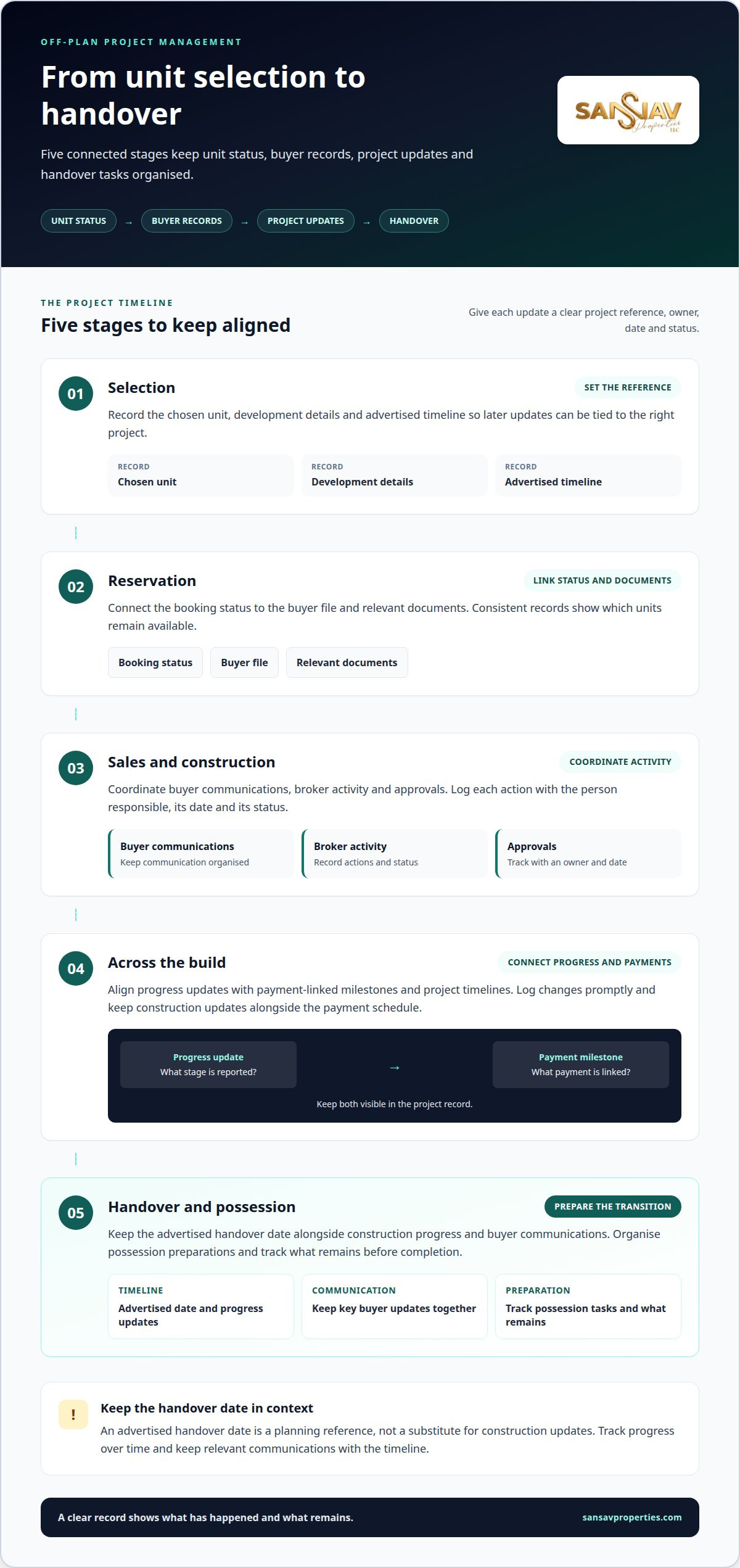
What are the main stages of managing an off-plan property project?
An off-plan project moves through linked stages, from reservation to possession. A clear process connects unit status, buyer records, project updates and handover tasks.
- At selection, record the chosen unit, development details and advertised timeline. This gives later updates a clear project reference.
- At reservation, link the booking status to the buyer file and relevant documents. Consistent records show which units remain available.
- During sales and construction, coordinate buyer communications, broker activity and approvals. Record each action with its owner, date and status.
- Across the build, align progress updates with payment-linked milestones and project timelines. Log changes promptly so teams work from current information.
- Before handover, organise outstanding documents, possession readiness and buyer notifications. This marks the shift from sales inventory to completed property.
If a booking changes, update the unit record and notify relevant teams before the next report. When a milestone update arrives, attach it to the timeline and payment record. This creates a traceable sequence from reservation through construction, instead of separate files that may become inconsistent.
After construction, handover preparation brings buyer records, document workflows and possession communications together. The project team can close open tasks, log completed steps and prepare the property for operational management. For a development with several units, a shared dashboard can show inventory changes, pending paperwork and buyer status without mixing records.
Clear records also support reporting at each stage. Teams can review reservations, construction updates and handover readiness together, then direct outstanding actions to the right people. Discuss your off-plan project to explore a considered approach to its management stages.
SANSAV Properties: Off-Plan Property Investment
SANSAV Properties offers Off-Plan Property Investment for buyers considering a purchase before construction is complete. This service can help you explore a development in relation to your intended use, preferred location and investment priorities. Questions about payment schedules and handover dates can provide a useful starting point for the discussion.
Bring the factors that matter to you, such as the type of home, project location and the role you expect the property to play. This provides a clear starting point for discussing an off-plan opportunity and the choices involved. You can also consider how the project fits your wider property plans, rather than treating its advertised handover date as the only factor.
SANSAV Properties also offers Secondary Market Residential Sales and Residential Rental Listings. These may suit different stages of your property search: a completed home or rental listing may be more relevant if you need somewhere to live sooner. For broader property requirements, the company also offers land for commercial and residential projects.
Before discussing options, consider which route matches your immediate objective. For an off-plan purchase, focus on the development and your priorities. If you are exploring a completed home, secondary-market sales may be a closer fit. Rental listings address a different need, while commercial or residential land supports a project-led search.
The right route depends on what you want to do next, whether you are assessing an off-plan investment, finding a home or exploring land. SANSAV Properties’ property offerings provide a starting point for a focused discussion. Contact SANSAV Properties to discuss your plans and next steps.
Choose the property route that fits your plans
Start by deciding what role you want a property to play in your plans. Consider whether you are preparing for a future home, building an investment portfolio or looking for somewhere to live sooner. This can help you frame a useful conversation and focus on the property route that suits your needs.
SANSAV Properties offers Off-Plan Property Investment, Secondary Market Residential Sales and Residential Rental Listings. Its professional real estate consultations can help you explore these routes in light of your priorities. If you are considering off-plan project management, bring your questions about the development and preferred next steps to the discussion.
A considered choice starts with your priorities, not just a project’s profile. Identify what matters most, then explore the option that aligns with your plans. SANSAV Properties’ real estate expertise can support a clearer conversation as you consider your next move.
Contact SANSAV Properties today to discuss your property plans and take the next step with confidence.
Frequently Asked Questions
How does it work?
Off-plan project management coordinates a buyer’s records and decisions from reservation through delivery. Keep your booking confirmation, payment evidence and developer communications together. Record each follow-up with its date and the relevant unit. This provides a useful reference if you need to clarify a booking, instalment or handover update, and helps keep information organised as the development progresses.
How long does completion usually take?
Off-plan developments in Dubai are commonly completed within 2-5 years, depending on project size and construction stage. A project at an earlier stage has a different timeline context from one already well underway. If you are planning a move or investment, factor the advertised completion date into your wider plans and follow project-specific progress updates as they become available.
What UAE laws and regulations govern off-plan property projects?
Dubai’s framework includes Law No. 19 of 2020, which sets out protections relating to off-plan projects. For your purchase, use the signed sale agreement and project registration details to understand the applicable project terms, and retain official notices alongside transaction documents. This gives you a reference point when reviewing project communications or changes; it does not replace understanding the terms agreed for your unit.
What are the main risks in off-plan projects and how can they be mitigated?
Key risks include construction delays, changes in project progress and confusion over unit or payment records. Reduce avoidable uncertainty by reviewing the developer’s delivery record, project information and purchase documents before committing. Keep dated copies of communications and payment records, and use the account specified in official project paperwork for project funds. These steps support clearer oversight but cannot remove every project risk.
How can buyers track construction progress and verify off-plan project milestones in the UAE?
Compare dated developer updates with the construction milestones and timeline in your project documents. Keep each update with its date, source and the milestone it describes, so changes are easy to follow. In Dubai, RERA and the Dubai Land Department monitor escrow accounts and construction milestones. Consistent records help you identify differences between reported progress and the project timeline.
What project management software and tools are used for off-plan developments?
Off-plan project management software can organise inventory, bookings, payment schedules, buyer records, project updates, documents and reporting. Teams can also use shared trackers and dashboards to follow milestones, payment status, pending tasks and handover readiness.


