

A signed contract is not the final proof of property ownership in the UAE: ownership officially transfers when the relevant emirate's land department issues a new title deed in your name. This is a key point in the UAE property ownership process. The Sales and Purchase Agreement sets out the payment plan, handover timeline, terms and ownership rights; the title deed records the completed transfer. SANSAV Properties LLC helps you navigate where foreign buyers can purchase across the Emirates, how designated ownership areas shape your options, what transfer and registration involve, and when legal advice can help clarify complex terms or ownership arrangements. This guide also covers how ownership may relate to UAE residency routes, so you can understand the documents, decisions and support involved in a home or investment purchase.
Key Takeaways
- Understand what a property transfer contract covers and why registration and the title deed matter to securing ownership.
- Learn how designated areas shape where foreign buyers can own property in Dubai, and which documents support a transfer.
- Recognise when legal guidance can help, particularly with mortgage settlement or a secondary-market transaction.
- Explore how property ownership may connect to residency routes, alongside support for off-plan purchases, rentals and property decisions.
What is a Property Transfer Contract?
The UAE property ownership process begins with a contract setting out payment terms, handover timing and ownership rights. For a ready home, a memorandum of understanding (MOU) records the agreed sale terms and deposit arrangements. Off-plan payments may be staged, linked to construction or continue after handover, according to the developer’s payment plan.
According to Government of Dubai, Dubai Law No. 8 of 2007 requires developers to hold off-plan buyer payments in separate project escrow accounts with accredited banks. Register off-plan property with the Dubai Land Department (DLD) under Oqood. The UAE property ownership process reaches legal completion when DLD issues a new title deed in the buyer’s name.
- Agree the sale terms and prepare the contract and identity documents, such as your passport.
- For an off-plan purchase, complete Oqood registration and follow the payment plan in the agreement.
- Submit the title-transfer application and supporting documents to DLD for a Dubai property.
- For Abu Dhabi or another emirate, apply through its property registration authority and follow its process.
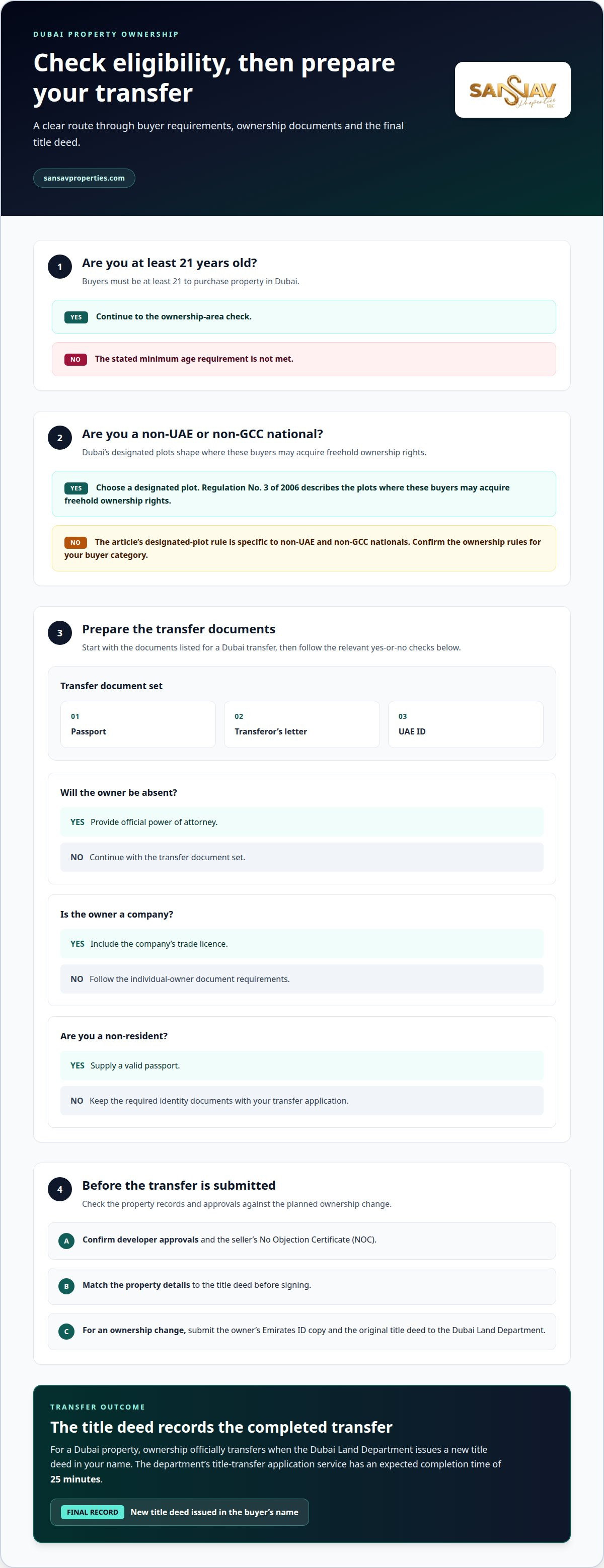
DLD’s title-transfer application service has an expected completion time of 25 minutes. The issued title deed records the completed Dubai transfer.
For a ready home, the MOU records the agreed deposit arrangements. Off-plan payments may be staged, linked to construction or continue after handover under the developer’s payment plan.
Where You Can Buy Property in Dubai?
According to Government of Dubai, Regulation No. 3 of 2006 describes designated Dubai land plots. Non-UAE and non-GCC nationals may acquire freehold ownership rights in those plots. Buyers must be at least 21 years old to purchase property in Dubai.
- Choose a plot in an eligible area, then confirm the title deed will record the intended ownership.
- For transfer, provide a passport, transferor’s letter and UAE ID. If the owner is absent, provide official power of attorney. Non-residents supply valid passports; companies provide trade licences.
- For ownership changes, submit the owner’s Emirates ID copy and original title deed to the Dubai Land Department.
- Arrange the seller’s developer No Objection Certificate (NOC) and confirm the ownership and transfer requirements.
Before signing, check the developer approvals and confirm that the property details match the title deed. Confirm the seller’s no-objection certificate (NOC) and any ownership and transfer requirements before proceeding.
A professional real estate consultation can clarify how location and ownership type fit your plans.
Legal assistance with property transactions
Legal support can clarify contract terms, mortgage settlement requirements and transfer documents before you sign.
Arrange legal assistance
Ask a property lawyer to review the agreement, ownership records and obligations before you commit. Non-residents can apply for UAE mortgages; non-resident borrowing from many banks typically requires a down payment of at least 35%, with eligibility assessed by the lender.
Submit the in-person transfer application
Bring the required documents to the Dubai Land Department service centre. Staff review the submission before entering the transaction into the system. After payment, the transfer is audited and approved, and a link to the title deed is emailed.
Pay transfer fees and administrative charges
Include Dubai Land Department transfer and administrative charges in your completion arrangements. Confirm in the agreement how the parties will allocate these costs, and ensure the transfer application reflects the agreed transaction.
Complete the secondary-market transfer
For a ready property, agree the terms, sign an MOU and pay the deposit before arranging the transfer at a trustee office. If the property has a mortgage, settle the outstanding loan before ownership transfers. The new title deed records the buyer as owner.
Property ownership and residency routes
- Buy property in Dubai without first obtaining UAE residency; foreign buyers do not need resident status to purchase.
- Keep the purchase agreement and original title deed together. According to Dubai Land Department, eligible Dubai property may qualify its owner for a 10-year Golden Visa, subject to the applicable property-value threshold.
- Consider the property-owner investor visa route. Eligible Dubai property may support an application for a renewable two-year residence visa, subject to the relevant criteria.
- For a Dubai property-owner residence visa, joint owners’ recorded shares affect eligibility. Review the ownership certificate to understand how each person’s share is registered.
- Use official ownership documents to support a visa application. The title deed identifies the registered owner, while the purchase agreement records the transaction terms.
- If a mortgage is involved, include its arrangements in your planning and keep related documents with the ownership records. The property’s eligibility and each owner’s recorded share can shape the residency route to explore.
Off-plan property services
An off-plan property lets you secure a home before construction is complete. First, compare the project, expected delivery timing and payment structure with your plans. In Dubai, an expression of interest (EOI) may provide early access before launch, but it is not always legally binding. Read its terms before committing.
A sound off-plan investment starts with understanding what the developer’s Sales and Purchase Agreement (SPA) promises. It sets out the payment plan, handover timeline, terms and ownership rights. Payments may be staged, linked to construction progress or continue after handover. Map each instalment against your cash-flow plans and the stated milestones, and do not assume every project uses the same schedule.
Guidance can help you compare project details, interpret booking and SPA documents, and understand the handover process. SANSAV Properties LLC provides off-plan investment support, helping you assess options against your intended use, investment aims and preferred payment structure. This gives you a clearer basis for comparing projects.
Property management
Once ownership is registered, consider how you will care for the property and keep it aligned with your plans. Apartment owners should understand building procedures, maintenance arrangements and access to shared facilities. These details shape day-to-day ownership, whether you live in the home or plan to rent it out.
Set a management plan before handover. Decide who will handle maintenance requests, keep records of work and communicate with building management. If you plan to rent out the property, consider how you will prepare it between tenancies, respond to repair needs and organise tenancy documents. For an off-plan property, clarify the handover process and record any maintenance matters to address after completion.
- Keep the title deed, purchase agreement and building correspondence together.
- Record maintenance requests and retain related invoices and reports.
- Review building rules and shared-facility arrangements.
- Decide how the home will be managed when you’re away or tenants occupy it.
A clear management plan helps maintain the property’s condition and makes ownership easier to manage over time.
Rental property services
To find a rental home, start with your priorities: location, commute, household needs and move-in timing. A clear brief helps narrow the search, whether you need a family home, a convenient base or somewhere close to work. Compare each property’s layout and location with the features that matter in your daily routine.
Before choosing, review the listing details, furnishings, building facilities and access arrangements. Consider how the home will work in practice, including storage, transport links and space for work or family life. Clarify tenancy terms and any agreed inclusions before you commit.
SANSAV Properties’ residential rental listings give you options to consider across Dubai. Share your requirements and compare suitable homes against your preferred location, lifestyle and intended move-in plans. A focused shortlist can make viewings more purposeful and help you decide which features are essential.
Ready to find a home that fits your plans? Explore Dubai rental listings and take the next step towards a residence that feels right for you.
SANSAV Properties LLC
SANSAV Properties LLC can connect the ownership process with a property decision shaped around your plans. Whether you are considering an off-plan purchase, a ready home or a rental, its guidance can help you identify a suitable next step and clarify what you want from the property.
Off-Plan Property Investment supports buyers considering developments and payment structures. Secondary Market Residential Sales helps you explore ready homes, while Residential Rental Listings provide options if you are looking to rent. Professional Real Estate Consultations can help you discuss ownership documents, transaction stages and how your intended use shapes your choice.
This support can help when you are balancing personal use, investment aims or a future move. A consultation can help you organise your priorities, compare off-plan and completed properties, and identify the service that best fits your decision, while keeping registration and ownership in view.
Contact SANSAV Properties LLC to discuss your property plans.
Shape your next property decision with clarity
A clear UAE property ownership process involves more than completing a transaction. It can help you choose a home or investment that fits your priorities now and your plans for the future. Start by defining the lifestyle or investment outcome you want, then use it to guide your property search and decisions.
SANSAV Properties offers Off-Plan Property Investment, Secondary Market Residential Sales and Residential Rental Listings, giving you different routes to consider. Its Professional Real Estate Consultations can help you discuss your priorities and assess which path may suit you, whether you are looking for a home, an investment or a rental.
Take the next step at a pace that feels right for you. A conversation with SANSAV Properties can help clarify your aims and identify a suitable way forward.
Contact SANSAV Properties to discuss your property plans and explore your next step.
Frequently Asked Questions
What Happens During the Conveyancing Stage?
Conveyancing coordinates the legal and administrative work required to complete a property sale. The parties review the sale agreement, confirm ownership and supporting documents, address any mortgage settlement and prepare the transfer application. For example, if the seller’s property has a mortgage, the outstanding loan must be settled before the title can transfer. Final registration records the buyer as owner.
Who can own property in the UAE as a foreign buyer?
Foreign buyers can own property in designated areas, but permitted ownership types and locations depend on the emirate. In Dubai, non-UAE and non-GCC nationals may acquire freehold rights in designated plots. Foreign buyers do not need UAE residency to purchase in Dubai. Before committing, match the property’s location and registered ownership type to your intended use.
Which UAE areas allow foreign freehold property ownership?
Dubai’s designated plots are the areas identified for non-UAE and non-GCC nationals to acquire freehold ownership rights. In Sharjah, foreign nationals may hold usufruct rights in government-designated areas, subject to special approval from the Ruler. These are different legal arrangements, so don’t assume that an area allowing foreign ownership offers freehold title.
What documents are required to purchase UAE property?
For a Dubai purchase, prepare a valid passport and transaction documents, including the purchase agreement. A title transfer may also require a transferor’s letter; companies must provide trade licences. If an owner cannot attend in person, an official power of attorney may be needed. Requirements can vary according to the buyer’s status and transaction type.
What are the differences between freehold, leasehold, and usufruct ownership in the UAE?
Freehold records ownership without a time limit in Dubai’s designated freehold areas. Leasehold generally grants the right to use a property for an agreed period; Dubai leasehold properties usually grant 99 years. Usufruct gives a right to use and benefit from property, subject to its terms. In Sharjah, foreign nationals may hold usufruct rights for up to 100 years in specified areas.


