

Foreign buyers can purchase property in Dubai’s designated freehold areas without UAE residency. Buying property in the UAE can therefore suit overseas investors as well as people planning a future move. When weighing ownership rights and possible residency, consider whether a property fits your goals, location preferences and potential rental demand. This guide covers foreign ownership, off-plan and resale homes, investment considerations and how property-linked residency options, including the Golden Visa, relate to a purchase.
Key Takeaways
- Foreign buyers can purchase in Dubai’s designated freehold areas without UAE residency; the permitted ownership area matters.
- Compare off-plan and resale homes with usufruct and leasehold rights to understand what you can own and for how long.
- Assess an apartment’s rental potential alongside its location and suitability for your investment goals.
- Property-linked residency has specific eligibility criteria, so understand how a purchase may relate to visa options before deciding.
Is buying an apartment in Dubai a good investment?
A Dubai apartment may suit you when its rental potential aligns with your investment aims. Compare expected rental income with likely demand, rather than relying on headline yields alone.
Rental Income and Yields
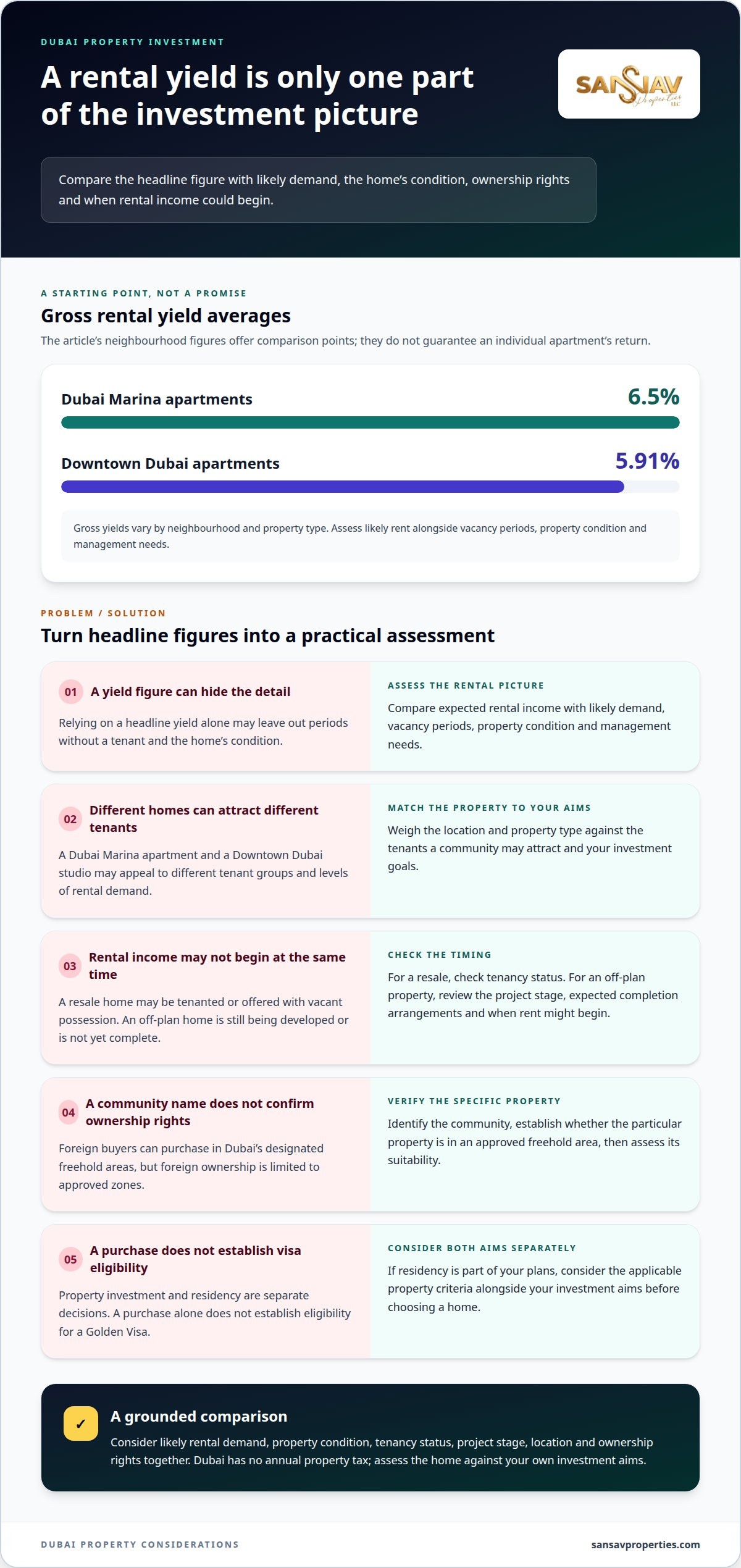
Gross rental yields vary by neighbourhood and property type. Dubai Marina apartments average 6.5%, while Downtown Dubai apartments average 5.91%. These figures offer comparison points, not a guarantee of your apartment’s return. Assess likely rent alongside vacancy periods, property condition and management needs. Consider how these factors may affect the rental income you receive from the property.
Investment Considerations
Compare a property’s potential rent with its condition and location. A Dubai Marina apartment and a Downtown Dubai studio may appeal to different tenant groups and attract different levels of rental demand. For a resale home, consider whether it is tenanted or available with vacant possession. For an off-plan property, consider the project stage and when rental income might begin. These details can help you assess how well a home fits your investment aims.
Investor Visas
Property investment and residency are separate decisions: a purchase does not, by itself, establish visa eligibility. If a Golden Visa is part of your plans, consider the applicable property criteria alongside your investment aims before choosing a home. Abu Dhabi offers a distinct ownership framework. Its real estate law was amended in April 2019 to allow foreign ownership in investment areas; Article 3(ii) covers non-UAE nationals’ rights in property located there.
Taxes and Ownership
Dubai has no annual property tax. Before choosing a home, consider its location, condition and potential rental demand. For a resale property, check whether it is tenanted or available with vacant possession. For an off-plan property, review the project stage and consider when rental income might begin. These details can help you compare homes and assess how each may fit your investment aims.
Off-plan, resale, usufruct and leasehold ownership
When buying property in the UAE, compare when you can use the home and what ownership rights the purchase provides. The construction stage and ownership type both affect your decision.
Off-Plan and Ready Property Comparisons
An off-plan property is under development or not yet complete; a ready home is available for occupation or resale. Compare the expected handover timing with your plans to move in or rent it out. For a ready apartment in Downtown Dubai, consider its condition and tenancy status. For an off-plan development, review the project stage and expected completion arrangements before committing.
Developer Checks for Off-Plan Purchases
Before choosing an off-plan property, research the developer and project through the relevant emirate authorities. In Dubai, the Dubai Land Department’s Escrow Account Service is intended to help safeguard buyers and developers during transactions. Review project progress, contractual terms and the development’s community setting to understand the residential project behind your proposed purchase.
Usufruct and Leasehold Ownership
Usufruct and leasehold provide defined property rights rather than freehold ownership. In Dubai, foreign nationals and expatriate residents may acquire usufruct or leasehold rights for up to 99 years. In Abu Dhabi, expatriates may hold residential units under usufruct for 99 years, or musataha for 50 years, renewable for a similar period by agreement. Long-term leases start at 25 years. In Sharjah, registered usufruct rights can run up to 100 years in specified areas, with special approval from the Ruler.
Property Purchase Documents
Document requirements depend on the emirate and type of sale. For applicable Dubai freehold sale registrations, the Dubai Land Department lists an electronic developer NOC among the required documents. This applies to certain registrations, not every purchase. Identify the transaction’s registration route and related paperwork early, as requirements may differ between resale and off-plan purchases.
Can foreigners buy property in Dubai?
Yes. Foreign buyers can purchase property in Dubai’s designated freehold areas without UAE residency. The permitted area determines which ownership rights are available.
Foreign Ownership in Designated Areas
Dubai Regulation No. 3 of 2006 identifies land plots designated as freehold for non-nationals. Article 3 of the regulation limits foreign ownership to approved freehold zones, so the emirate-wide rule does not give foreign buyers the same rights everywhere.
The UAE has designated areas where foreign nationals can and cannot buy property as freehold or leasehold. Before pursuing a purchase, identify the property’s location and establish which ownership type applies. This distinction matters at registration: a property outside an approved freehold zone may not offer the same ownership rights as one within it.
Choosing Freehold Areas and Communities
Once you establish that a property is in a designated zone, compare communities based on how you plan to use it. For a home, consider access to everyday amenities and whether the location suits your routine. For an investment, weigh potential rental demand and the types of tenants the community may attract. Palm Jumeirah is one recognisable Dubai location to consider when comparing neighbourhoods.
Follow a clear sequence: identify the community, establish whether the specific property is in an approved freehold area, then assess its suitability. Do not assume the community name alone settles the ownership question; designations apply to specified plots. This location-first approach helps distinguish freehold ownership from leasehold rights and focus your search on properties that fit your plans.
Property-linked UAE residency visas
Property ownership and UAE residency are connected options, but they are separate decisions. A home that suits your investment or lifestyle plans may also be relevant to a residency application, so consider both aims before committing. Be clear about whether you plan to live in the property, rent it out or hold it as an investment.
The Federal Authority for Identity, Citizenship, Customs and Port Security lists a 10-year UAE Golden Visa route linked to property purchases. Treat this as a reason to consider residency alongside your property choice, not as a substitute for assessing the home itself. The location, ownership arrangement and your longer-term plans all shape whether a property fits your priorities.
Mortgage terms also affect your decision. Residents may be able to borrow a greater share of a property’s value than non-residents. Weigh the financing arrangement against your intended holding period and how you plan to use the property. Financing can affect the flexibility of your plans, so include it in your overall assessment.
Before selecting an apartment, clarify your priorities for residency, ownership and day-to-day use. A home for personal occupation, for example, may need to meet different requirements from a rental investment. Consider how the purchase agreement and ownership documents relate to your plans. Weighing these questions together helps you assess the property within the context of your broader UAE plans.
For a considered conversation about property and residency options, contact SANSAV Properties LLC.
SANSAV Properties
SANSAV Properties can help you consider your next step, whether you’re choosing a home, assessing an investment or exploring rental options. Its professional real estate consultations can help clarify your priorities, including the property type, location and intended use that suit your plans.
If you’re considering a home still under development, SANSAV Properties’ Off-Plan Property Investment service can help you explore that route. Secondary Market Residential Sales covers existing homes, while Residential Rental Listings offer an option if you’re not ready to buy. Compare these routes against your circumstances rather than assuming one is right for everyone.
If you’re ready to discuss your property plans, contact SANSAV Properties.
Shape your next property decision
Before taking your next step, decide what you want the property to make possible. A home, an investment and a future move to the UAE can involve different priorities, even if the same apartment seems to suit them all. Set out your intended use, preferred timeframe and how residency fits your plans to give your decision a clearer foundation.
Buying property in the UAE is a significant personal decision, so consider your priorities as carefully as the property itself. SANSAV Properties’ team can bring professional real estate expertise to your discussion and help you weigh the options against your aims and preferred direction.
Start a conversation when you’re ready to shape your plans. Contact SANSAV Properties and take your next step with clarity and confidence.
Frequently Asked Questions
How can I assess whether an apartment suits my needs?
Compare similar apartments in the same community by usable area, layout, condition and building facilities. A home needing renovation or with an existing tenancy may not be directly comparable to an updated, vacant unit. Consider potential rental income and whether the property’s features and location support your intended use.
How long does the home buying process in Dubai take?
A Dubai property purchase usually takes four to eight weeks, while an agreed transfer timeline is usually 30 to 60 days. The schedule depends on the transaction, documentation and coordination required between the parties. For example, a resale purchase involving a developer NOC may require an additional document step before applicable freehold sale registration can proceed.
Is it helpful to work with a local agent?
Yes. An agent can help you assess homes against your intended use and coordinate the transaction. If you’re weighing a family home against a rental investment, for example, a property professional can help compare location, tenancy status and building condition. SANSAV Properties offers Secondary Market Residential Sales and Professional Real Estate Consultations for buyers considering these decisions.
What are the best tips for first-time home buyers in Dubai?
First decide whether you need a home to live in or an investment to rent out, then focus on properties suited to that purpose. For a resale apartment, assess its condition, building, parking allocation and tenancy status. For an off-plan home, include the developer and project in your due diligence. Clarify your preferred location and practical requirements before comparing options.
What should I check on the title deed before buying an apartment?
Review the title deed, unit details and parking allocation, and compare them with the sale documents. Confirm whether the property is tenanted or being sold with vacant possession. Check the condition of both the apartment and the building, as repair needs may affect your plans after transfer.
Can foreigners buy property in the UAE, and which areas are freehold?
Yes, foreign buyers can purchase property in designated freehold areas of Dubai without UAE residency. Dubai Regulation No. 3 of 2006 identifies plots designated for non-national freehold ownership, so eligibility depends on the specific property’s location. There is no single emirate-wide freehold rule for foreign buyers; check the ownership designation for the property and emirate you are considering.


